

Nicholas Burrowes: Who Chose this Environment for Your Brand?
I was looking for a cheap runabout for a family member and a pair of used football boots for my son. A perfectly mundane errand, conducted on Facebook Marketplace.
What I found, in a few scrolls, was size 5 Adidas F50 boots, 2006 Subaru Outback, guided masturbation lessons, an AI companion inviting me to try her now, a sensory adult experience described as "hands free and eyes closed," a deepfake porn generator, and a Hastings Girls' High School campaign inviting families to book a school tour.
Focus for a second: a school, recruiting families, in that same grid.
I've been in media a long time and I'm no prude nor easily shocked. But I sat there for a moment genuinely unsure whether to laugh or just feel sad about it.
Before you think this is a long-toothed media guy annoyed budget has moved elsewhere - I've always been reasonable about channel mix. Different channels find different audiences. That's not a controversial position and I've never argued against it. But this isn't really about channel mix anymore, it's something else entirely: we no longer own where our brands appear, and we've stopped asking if that matters.
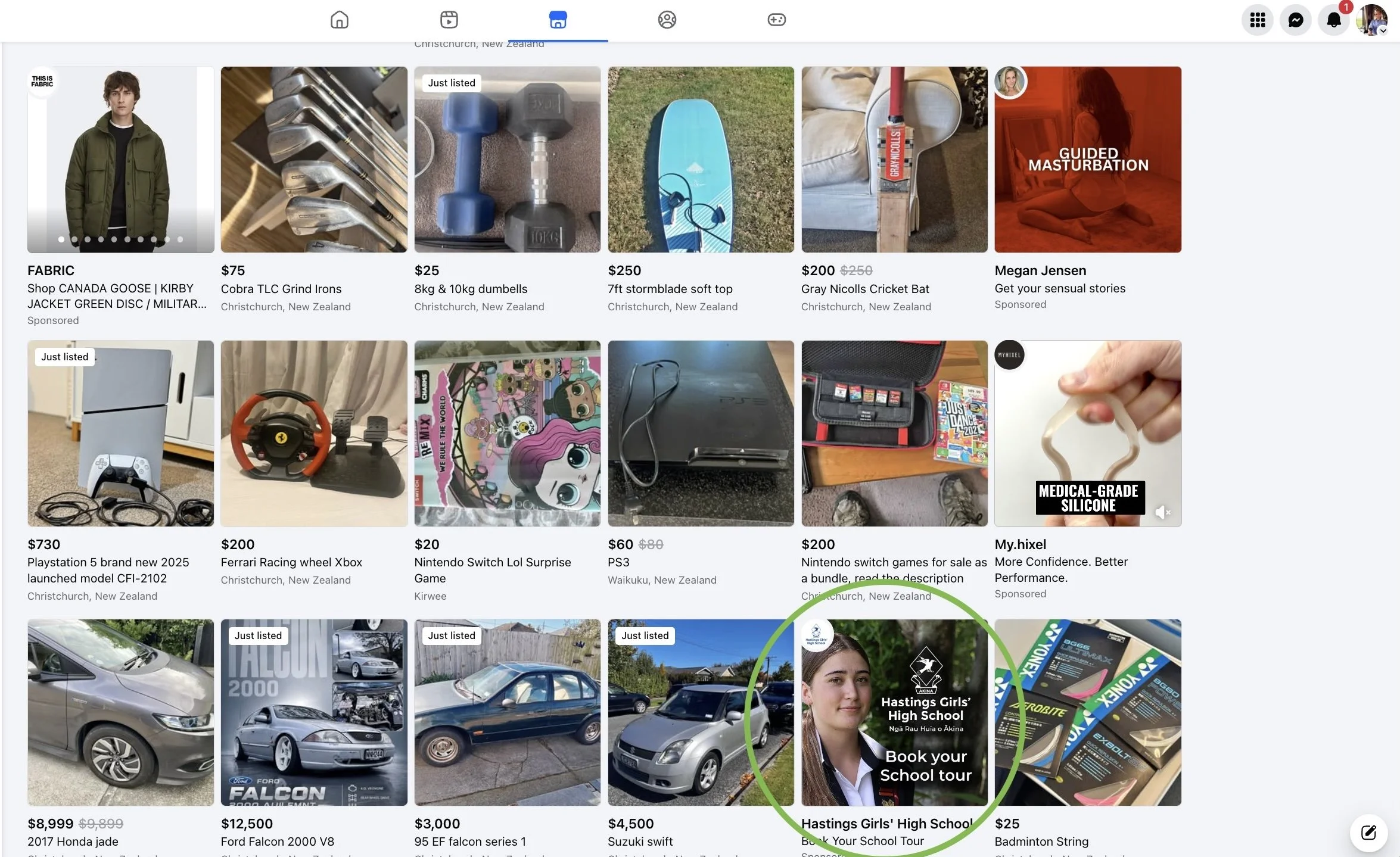
Above: seems like a legit space for a girl’s high school.
I Know What Your Brand Did Last Summer
Think your brand is immune? I've seen a number of our own advertising partners in this space. Not just having a dabble, but multi-ad campaigns on Meta that will surely have chunky spend behind them.
What prompted me to write this wasn’t posturing or to throw rocks. Just genuine surprise at how many brands I recognise and respect are running campaigns in environments they'd never consciously choose if someone showed them the setting first. Or perhaps they've chosen not to care.
Years spent building a premium product. The detail, the craft, the positioning. Now appearing in environments that undermine all of it, alongside ads you'd not want your child to see. Days or weeks agonising over the right font to then have it sit next to spread-legged grannies. You might have proudly entered your thoughtful campaign in industry awards, to now demean the work by association with ‘men’s silicone ring enhancers’.
The brand you've built is moonlighting in places it was never designed to be, amongst some shifty characters. And sometimes the brands or people you partner with are there too, whether they know it or not.
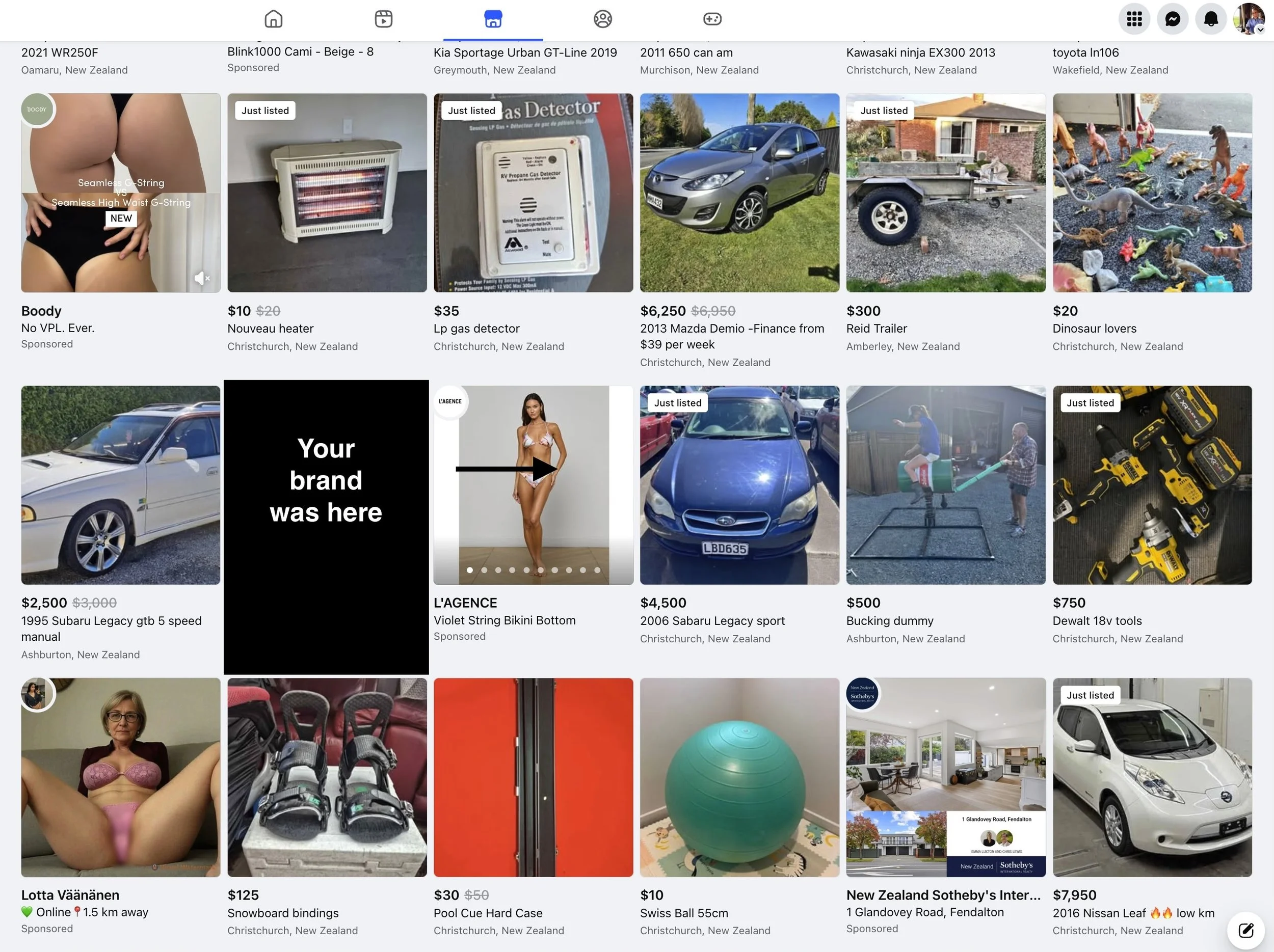
Above: Who gave this the green light for your business? Grannie Lotta seems to approve.
Who Actually Made This Decision?
When I ask brands about their Meta spend, the answer is usually a version of the same thing: a digital agency manages it, the dashboard looks great, the CPM is efficient.
Efficient relative to what? I was looking for a $3,000 AWD wagon with a current WoF, and alongside this were paid ads for Mercedes Benz and Cadillac.
Efficient at appearing in front of people, yes. Efficient at what that appearance does to your brand - that's a different question entirely, and one most digital agencies aren't incentivised to ask. For many the model rewards volume and retention of budget, not interrogation about context or positioning.
So here's the question I'd put to any marketing manager running Marketplace placements right now: did you choose this environment, or did someone you pay choose it for you?
There's a meaningful difference. And if you're a brand manager or strategist letting this happen without question, it's worth asking what you're actually being paid to protect.
Context Used to Be a Deliberate Act
I remember advertisers calling upset if a competing brand appeared in the same issue (it still happens!). If there was any sense of product similarity such as a perceived copy, a rival gripe in the same category, then it was a conversation, or sometimes even a complaint we were supposed to act on. If Homestyle ran this type of advertising now, I am certain we would lose clients on the spot, while the budget would move to platforms. We are still held to account for context in ways that now seem almost quaint.
Similar premium brands are now running dozens of simultaneous ads across a platform with no editorial standards whatsoever, apparently without a second thought.
Brands once chose their media environments the way they chose their retail locations, their packaging, their spokespeople. The choice communicated something. Everyone understood that a full page in a design title meant something different to a classified listing. A billboard outside the airport was worth more than one on the side of a suburban dairy. That logic wasn't snobbery, it was strategy.
That thinking hasn't become irrelevant. It's just been quietly abandoned in favour of reach metrics and platform convenience.
I didn't want to click on some of what I saw. Not because I'm precious, but because I didn't want those links in my browser history, or following me around the internet for the next month. That's how degraded the environment has become: a legitimate user, conducting a legitimate search, actively avoiding sponsored content because of what clicking might imply.
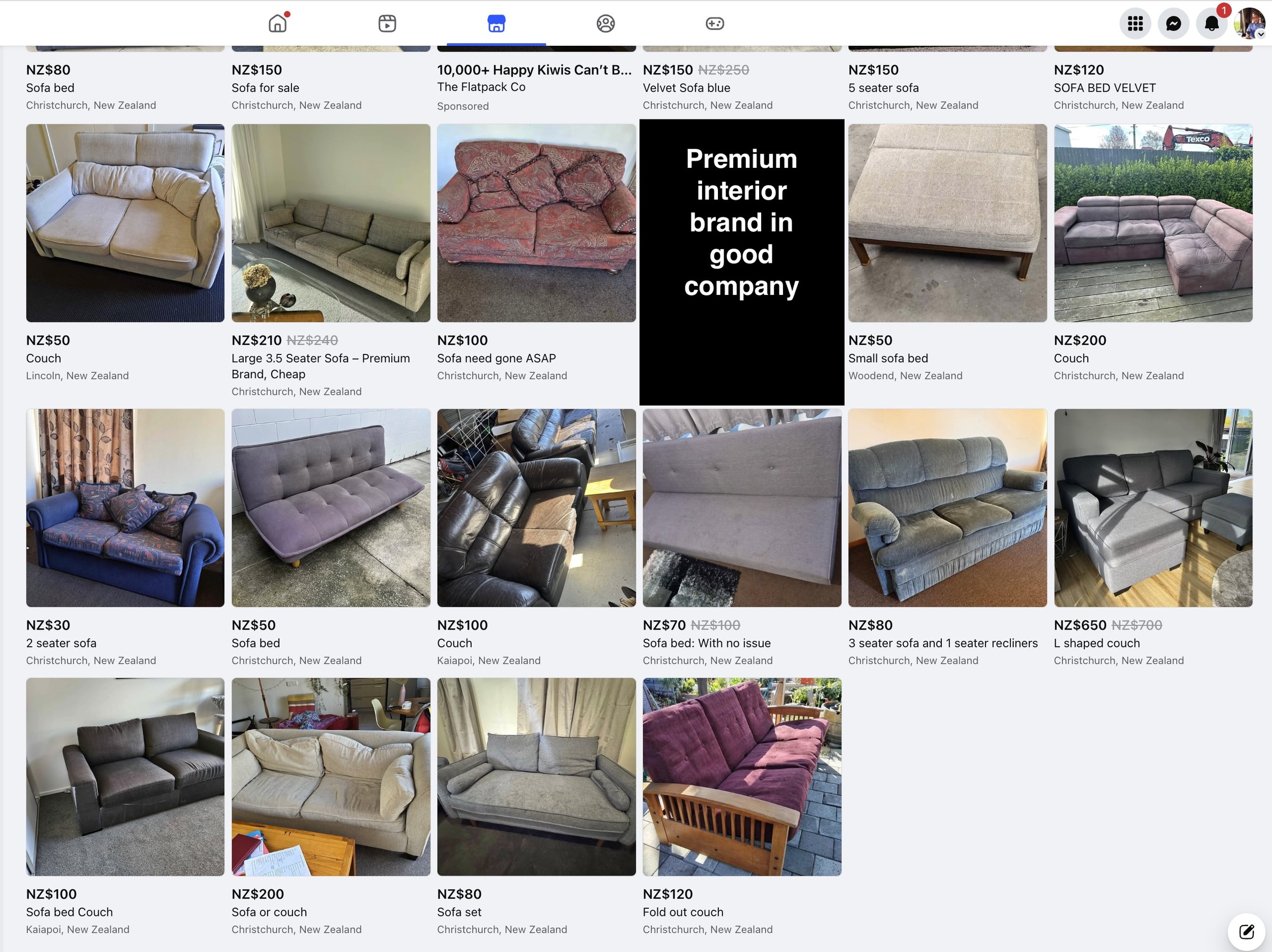
Above: It’s not just smut concerns - someone paid to be here in the search for “cheap used sofa”.
End of Brand Positioning and Safety?
That standard hasn't disappeared. It's just no longer being applied.
The brands that built reputations on quality, craft, and considered positioning didn't do that by accident. They made deliberate choices at every touchpoint. The media environment is a touchpoint. It always was.
The litmus test is pretty simple: would you happily show your boss, your mum, or your child the matrix of Marketplace ads with your brand amongst it? I think not.
What's changed isn't the logic. It's the attention being paid to it, or lack thereof.
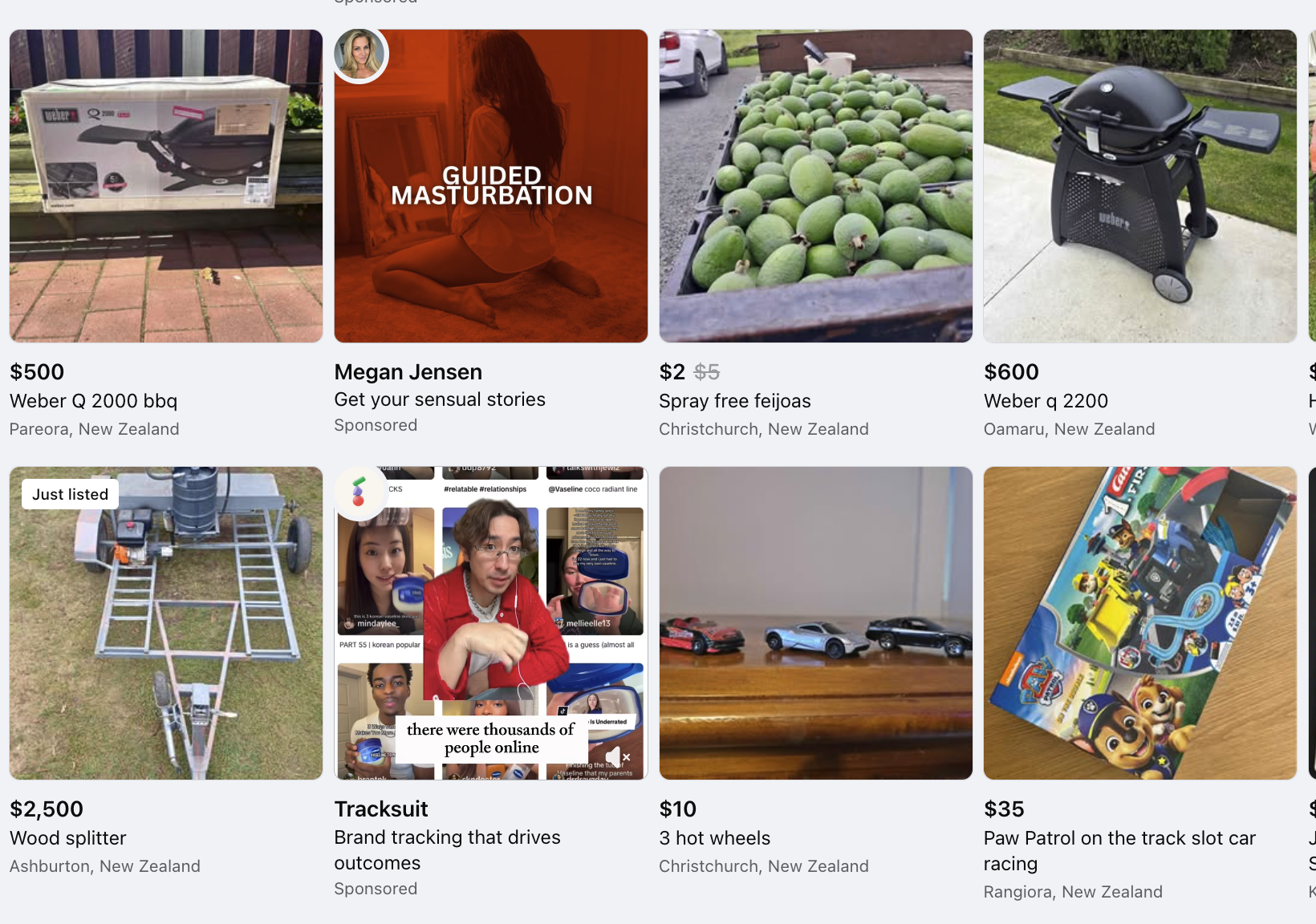
Above: Brand tracking meets Marketplace. Guided what?
Context Is Still Very Available. You Just Have to Choose It.
Contextually appropriate environments still exist. Editorial channels with verified, engaged audiences still exist. Human oversight and care for the brand health of their clients. Placements where your brand appears alongside content your customers actively chose to engage with or search for.
They just require a deliberate decision rather than default settings, default dashboards, and blind faith that platforms have your business success at heart.
There was a time when a media placement meant something because someone in the chain paid attention and chose it carefully.
That option hasn’t gone anywhere. What’s changed is whether anyone still feels responsible for making that choice.
Postscript:
Since writing this, the content has deteriorated further. More sponsored ads for deepfake software - explicitly showing what can be done with anyone's photo - were running openly in Marketplace this week. That's not a brand safety problem. That's potentially illegal under NZ law.
If you want to talk about what context means for your brand, get in touch. (or if you just want to know if you’re on the list of the many brands in this space)
Nicholas Burrowes is General Manager of The Pluto Group/Homestyle and board member of the Magazine Publishers Association (MPA).
Sign up to Homestyle intelligence updates
Recent Stories by Nicholas Burrowes
-
Who chose this environment for your brand?
Five minutes on Facebook Marketplace is enough to find household brands advertising in some alarming places. -
Everybody's Got an Audience Plan Until They get Punched in the Mouth
How brands lost control of their audiences - and mistook dashboards for certainty -
The Channel that Endured:Why Print May Outlive the Website
As access to audiences becomes less certain, control is becoming the more valuable asset -
Letting the Defender do the Work
Experiencing the full Land Rover Defender 2026 range in Taupō. -
Esperienza Ferrari on Ice 2025
Drifting the 12Cilindri across snow-covered alpine fields of the Southern Hemisphere Proving Grounds. -
On the Trail with Toyota
Exploring the West Coast’s wildest 4x4 terrain in the new Prado Hybrid. -
The Defender Journey with Land Rover
Traversing the rugged and picturesque high country of Central Otago in the Defender, and savouring the luxury of The Lindis.