

Nicholas Burrowes: The Channel that Endured: Why Print May Outlive the Website
As someone who runs a magazine brand in 2025 with print still the core medium, I'm supposed to be nervous. After all, we've spent two decades hearing that print is dying, that digital is the future, that websites would replace physical publications entirely. I vividly recall when the iPad launched in 2011 being proclaimed either the remedy or the reaper for the future of print.
But fifteen years later, it is worth examining where consumer media behaviour has landed.
Over 9 million magazines were purchased at retail in New Zealand in the last 12 months. Not controlled circulation, free magazines, brand-owned publications, or bundled subscriptions, but individual, paid editorial media purchases. These are people walking into shops and actively choosing to buy magazines, one by one. Magazine subscribers who pay to have titles delivered to their homes or businesses sit on top of this number.
Millions of deliberate decisions where consumers exchange money for content they value - and cover prices have only been increasing.
The question isn't whether print is thriving or declining. The question is: what does this transaction behaviour tell us about how people actually consume media, and what they're willing to pay for.
The Abundance Problem
Tom Goodwin recently articulated something many of us feel: "Everything is becoming so easy that everything is becoming abundant, and that's making everything impossible."
Brilliant newsletters drown in overwhelmed inboxes. Thoughtful articles disappear into algorithmic feeds. Quality video is buried under a rising tide of AI-generated filler. It’s not that quality has disappeared, rather that it has become invisible.
This is the core problem with digital publishing today. Not that it's bad, but that there is simply too much of it.
When everything is infinite and free, nothing stands out. When attention becomes the scarcest resource, curation and scarcity regain value.
Print never had to solve the abundance problem because it never created it. Finite pages, physical constraints, production costs: all the supposed weaknesses of print are now functioning as filters that create meaning.
The Three-Act Structure Nobody Saw Coming
Act One (2000s–2015): Websites were going to kill print. Why pay for physical content when the internet offered everything for free? Publishers rushed online. Some adapted well. Many didn't. The ground shifted.
Act Two (2015–2025): Social platforms hollowed out websites. Why visit a destination site when Facebook, Instagram, or LinkedIn could drip-feed content into endless feeds? Engagement migrated. Comment sections emptied. Loyalty thinned.
Act Three (2025+): This is where we are now, and the outcome is looking very different to what was widely predicted.
What's Actually Happening to Digital Publishing
After years inside the media ecosystem, the patterns are hard to ignore.
Many digital publications now struggle to maintain output cadence, retain specialist writers, or sustain meaningful engagement. Websites increasingly function less as destinations and more as occasional links inside feeds they don't control.
This isn't about individual publishers failing. It's about the structural economics of the format.
Mid-scale publications, particularly in small markets like New Zealand, face the hardest reality. What works at massive global scale, or in narrow high-value niches, does not automatically translate to the middle. And most publishers live in the middle.
A Narrative Worth Challenging
Publishers were often painted as slow to adapt or resistant to digital change. There's some truth in that - but it's an incomplete story.
Many magazine publishers invested heavily in digital: sophisticated platforms, paywalls, multi-channel strategies, audience development. The innovation existed and the execution was often competent. What failed to materialise were the promised economics.
Digital advertising commoditised rapidly. CPMs collapsed. Scale concentrated upward. And yet the narrative became "publishers failed to adapt" rather than "the digital business model didn't deliver."
That distinction matters, because it shapes how media strategy is judged today. Format economics matter more than ideology.
The Issue with Most Websites
Media analyst Brian Morrissey describes today's environment as "post-pageview media." It's an acknowledgment that building sustainable businesses around webpages monetised by display ads is largely over.
As Washington Post CTO Vineet Khosla puts it: "People aren't moving to Instagram because Instagram has better journalists. They're moving because the container is better."
Publishers lost control of distribution, and with it, audience predictability.
Most general-interest websites lack defensibility. They compete with infinite free content. They live at the mercy of algorithm changes. They cannot guarantee their audience will even see their work.
There are exceptions: The New York Times, business intelligence platforms, specialist subscription models. But these are scale or niche outliers. They do not generalise to most mid-tier publishers, which covers the bulk of the New Zealand market.
Email newsletters face their own erosion: deliverability issues, aggressive filtering, inbox fatigue. The format still works, but the certainty email once promised has quietly disappeared.
The defensive moats many publishers believed they were building online turned out to be far more fragile than expected.
AI and the Next Extraction Cycle
AI adds another layer of pressure. We’ve been to this rodeo before.
Large platforms can now scrape, summarise, and redistribute content without sending clicks or revenue back to the source. Strong brands might still hold authority, but the content economics keep eroding.
The choice publishers face is unenviable. Hand over intellectual property to become an AI "authority," or block AI and risk digital invisibility. Either way, the commercial upside flows elsewhere and offshore.
We may well be watching the final extraction phase. Another fracking of the media ecosystem, where scale platforms win, again.
What Paid Media Reveals
In a media landscape awash with volatile metrics, purchasing behaviour remains a clear and constant signal.
Those 9 million magazine purchases represent genuine willingness to pay. Each one is an active decision: not an impression, not a click, not a metric shaped by algorithms.
This is market validation at its simplest.
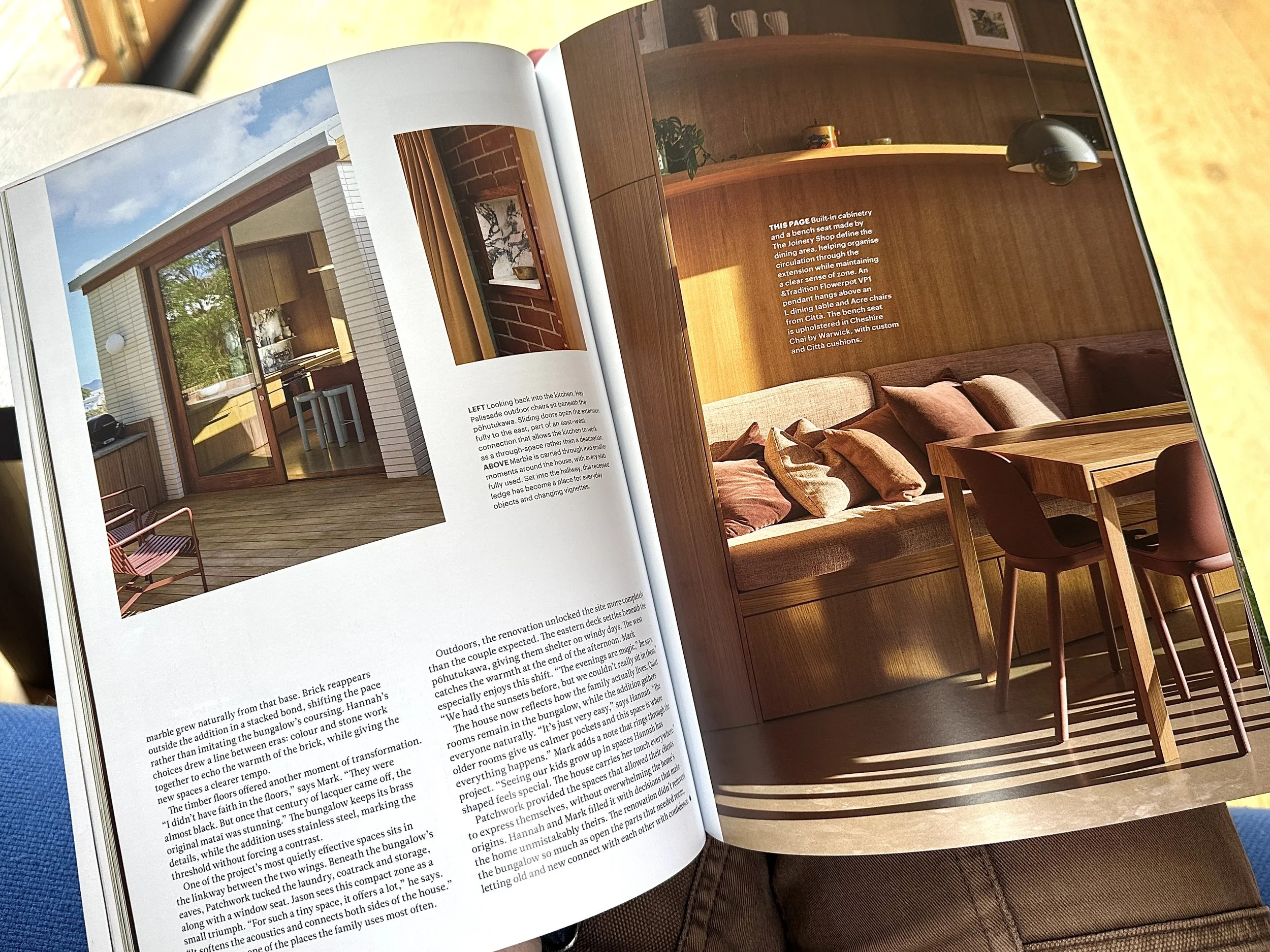
Another real-world signal: Homestyle increased its cover price by 30% last year with negligible impact on purchasing behaviour. There is no subscription lock-in. Every sale is a fresh decision. When readers value the product, demand becomes surprisingly inelastic.
That's not theory. It's transaction data.
The Difference Between Measurement and Control
What I see on the brand side is ceded control disguised as measurement and dashboards. Teams approve digital spend inside systems they don't own, report on metrics they quietly distrust, and call it accountability because it feels safer than admitting how much agency has been handed away.
Hamish McKenzie recently put it plainly: "If you don't own your relationship with your audience, someone else can decide whether or not you're able to reach them." This applies to publishers as much as creators.
In that context, print stands out not because it is nostalgic, but because it operates within clear standards that both readers and advertisers value. There are editorial safeguards, trusted environments, and deliberate context. You know where your brand appears, what it sits beside, and that readers actively chose to be there. In a market driven largely by inference, that kind of shared trust is increasingly rare and increasingly valuable.
The Unexpected Resilience of Print
When someone buys or subscribes to a print magazine, several things happen that digital can't guarantee:
-Delivery is certain. No algorithm decides if it arrives
-Attention stays compressed, not fragmented across infinite scroll
-Engagement lasts weeks, not seconds
-The product gets experienced whole, not in fragments of feeds
-Physical presence creates ongoing visibility in actual spaces
-For advertisers, this offers something increasingly rare: certainty
Your message isn't subject to feed volatility, deliverability collapse, or platform whim. You are physically present in homes, studios, cafés, and shared spaces. Picked up, returned to, and engaged with in full context.
Certainty has quietly become a premium attribute.
The Power of Intentional Audiences
Print magazines also deliver something digital targeting often promises but rarely achieves: intentionality.
Buying a title like Homestyle signals active engagement with homes and interiors: planning renovations, considering furniture, thinking seriously about how people live. A cooking magazine signals planning, shopping, and participation. Travel, cycling, weddings, gardening, every category: the same logic applies.
Readers pay to enter a category and self-select through purchase.
That is fundamentally different from algorithmic inference. You're not hoping a platform guessed correctly based on browsing history. You're reaching people who have declared interest with their wallets.
That level of qualified engagement is increasingly rare and not easily manufactured.
One further advantage is optionality. Print publishers can naturally extend campaigns into digital channels: websites, social and email sit naturally alongside print. Digital-only publishers can add print, but it’s harder to do well, or consistently. In practice, the optionality still tends to flow one way.
The Cosmic Irony
Websites were meant to replace print because they were free, instant, and infinite. Those same qualities are now destroying their value.
Print was meant to die because it was scarce, slow, and finite. Those qualities have become its strengths.
Scarcity creates value, physicality creates commitment and when space is limited curation and editorial judgment matters because you can't publish everything.
Reports of My Death Are Greatly Exaggerated
This isn't nostalgia, and it isn't binary thinking.
But the market signals are clear:
-Platforms hollowed out websites the way websites once impacted print
-Attention scarcity now favours formats that compress and hold it
-Transaction data confirms willingness to pay
-Physical distribution has become an advantage, not merely a cost centre
-The channel declared dead may yet outlast its replacement
The Path Forward
The future isn't print versus digital. It's alignment.
-Platforms for discovery
-Print for depth, intent, and premium engagement
-Digital evolving through ownership, memberships, and community
-Hybrid models that use each channel for what it does best
Of course some digital models will endure and some print titles won't. But the publishers most likely to survive are those who preserved optionality rather than betting on a single format ideology.
In 2005, the idea that vinyl’s most valuable years lay ahead would have seemed absurd. Yet its resurgence was driven not by scale or convenience, but by scarcity, ritual, and a smaller audience willing to choose it deliberately.
There is a world where, ten years from now, having a physical magazine is a premium differentiator - proof that your content is valuable enough to warrant physical space in someone's life.
We're already living in that world.
Nicholas Burrowes is General Manager of The Pluto Group and board member of the Magazine Publishers Association (MPA).
Sign up to Homestyle intelligence updates
Recent Stories by Nicholas Burrowes
-
Who chose this environment for your brand?
Five minutes on Facebook Marketplace is enough to find household brands advertising in some alarming places. -
Everybody's Got an Audience Plan Until They get Punched in the Mouth
How brands lost control of their audiences - and mistook dashboards for certainty -
The Channel that Endured:Why Print May Outlive the Website
As access to audiences becomes less certain, control is becoming the more valuable asset -
Letting the Defender do the Work
Experiencing the full Land Rover Defender 2026 range in Taupō. -
Esperienza Ferrari on Ice 2025
Drifting the 12Cilindri across snow-covered alpine fields of the Southern Hemisphere Proving Grounds. -
On the Trail with Toyota
Exploring the West Coast’s wildest 4x4 terrain in the new Prado Hybrid. -
The Defender Journey with Land Rover
Traversing the rugged and picturesque high country of Central Otago in the Defender, and savouring the luxury of The Lindis.